Silica Sleeve for Exhaust Pipe and Exhaust-Adjacent Components
Exhaust systems create two different thermal protection problems that are often grouped together even though they require different solutions.
In one installation, the exhaust pipe itself is the component being insulated. The objective is to place a high-temperature layer directly around the pipe and reduce heat transfer toward the surrounding area.
In another installation, the exhaust remains uncovered while a nearby hydraulic hose, electrical cable, wire harness or tube needs protection from exhaust heat.
A silica sleeve for exhaust can be considered in both types of thermal system, but the sleeve diameter, construction, temperature exposure and design objective are not necessarily the same.
BSTFLEX manufactures high temperature silica sleeve products in braided and texturized constructions for exhaust, hose, cable, pipe and industrial thermal protection applications.
Two Exhaust Heat Problems, Two Different Design Objectives
The first question should be:
What exactly are you trying to keep cooler?
If the answer is the area surrounding the exhaust pipe, the project is primarily an exhaust insulation problem.
If the answer is a hose, cable, wire or tube located beside the exhaust, the project is primarily a component-protection problem.
| Installation | Sleeve Location | Primary Objective |
|---|---|---|
| Direct exhaust insulation | Around the exhaust pipe | Reduce heat transfer from the hot pipe |
| Hydraulic hose protection | Around the hose beside the exhaust | Reduce radiant heat reaching the hose |
| Cable protection | Around the cable beside the exhaust | Protect cable insulation from external heat |
| Wire harness protection | Around the harness near exhaust components | Reduce thermal exposure |
| Tube protection | Around fluid or sensor tubing near exhaust | Shield the tube from external exhaust heat |
Defining this objective first prevents a common mistake: selecting the same sleeve construction for every application simply because all of them are located around an exhaust system.
Silica Sleeve Directly Around an Exhaust Pipe
When a silica sleeve for exhaust pipe is installed directly around a hot pipe, the sleeve becomes part of the exhaust insulation system.
The thermal interface is severe because the inside of the sleeve may be positioned directly against or very close to the hot metal surface.
The specification should therefore begin with the actual exhaust pipe surface temperature rather than only the exhaust gas temperature.
Important information includes:
- Exhaust pipe outside diameter
- Pipe surface temperature
- Continuous operating temperature
- Peak temperature and duration
- Required insulated length
- Pipe bends and geometry
- Joints, flanges and sensor locations
- Vibration
- Available insulation clearance
Exhaust Gas Temperature Is Not the Same as Pipe Surface Temperature
This distinction matters when selecting an exhaust pipe insulation sleeve.
The gas flowing inside an exhaust pipe can operate at a different temperature from the outside surface of the metal tube. Material, wall thickness, airflow, engine load and surrounding conditions influence the external surface temperature.
The silica sleeve interacts directly with the outside of the pipe, not with the exhaust gas flowing through its center.
For this reason, where possible, use measured or engineering-estimated pipe surface temperature when specifying direct exhaust insulation.
Continuous Operation and Exhaust Temperature Peaks
Exhaust systems rarely remain at one perfectly constant temperature.
Operating conditions can change with:
- Engine load
- Engine speed
- Vehicle duty cycle
- Generator loading
- Exhaust after-treatment events
- Startup and shutdown
- Ambient temperature
A useful exhaust insulation specification should therefore separate normal operating temperature from maximum short-duration exposure.
| Parameter | Example of Information Needed |
|---|---|
| Normal pipe surface temperature | Continuous operating condition |
| Maximum pipe surface temperature | Highest expected peak |
| Peak duration | Seconds, minutes or hours |
| Peak frequency | Occasional or repeated cycle |
| Ambient temperature | Temperature around the insulated assembly |
Pipe Diameter Determines the Starting Sleeve Size
For direct exhaust-pipe insulation, measure the actual outside diameter of the pipe.
Do not assume that the nominal pipe or tube designation is equal to the finished OD.
The assembly may also include:
- Weld beads
- Clamps
- Couplings
- Bellows
- Flex sections
- Sensor bosses
- Flanges
- Changes in pipe diameter
If the sleeve must pass over any of these features, the largest dimension can control installation.
Exhaust Pipe Bends Need Flexible Insulation
Exhaust routing is rarely completely straight.
Automotive, diesel, marine and generator exhaust systems can contain multiple bends in relatively short distances.
A flexible textile construction has an advantage over rigid insulation in these areas because it can follow suitable curved sections without requiring a separate fabricated shield for every change in direction.
For complex exhaust geometry, sleeve diameter, wall construction and bend radius should be evaluated together.
Braided Silica Sleeve for Exhaust Applications
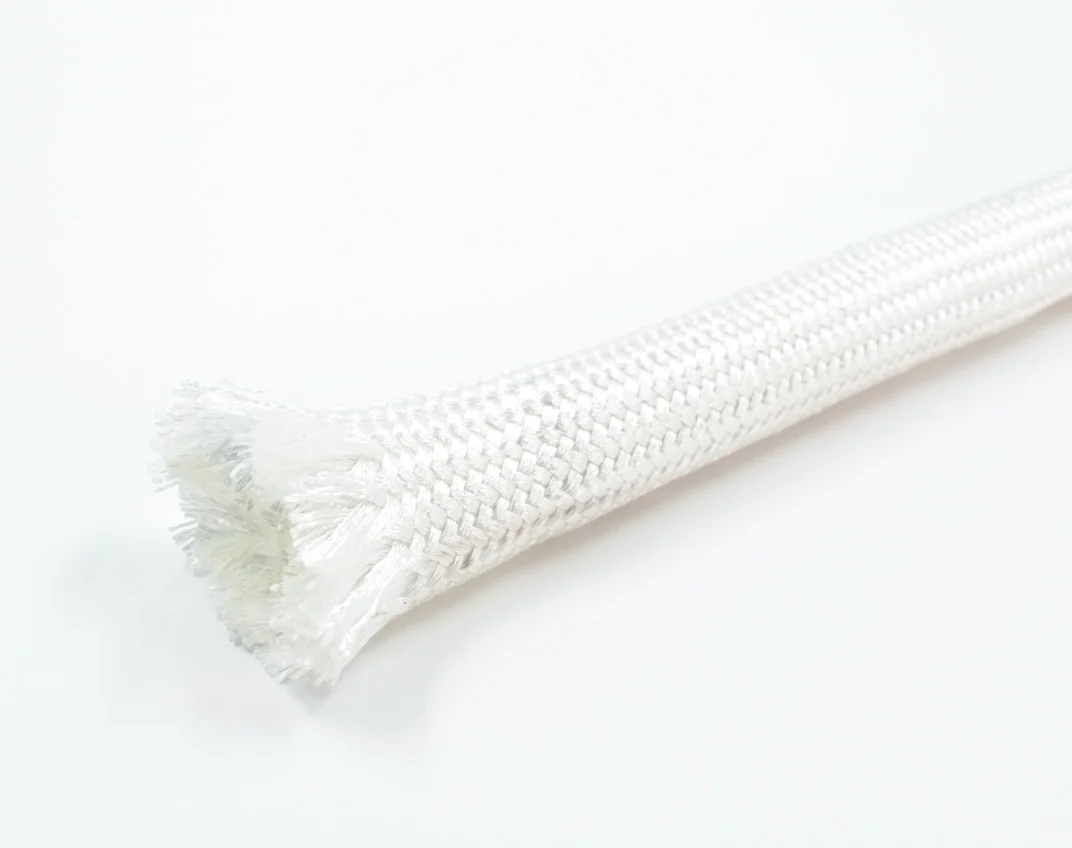
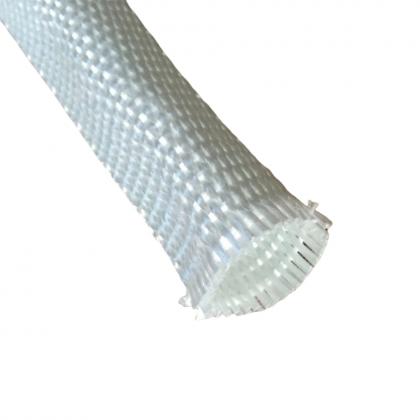
Braided construction provides a flexible tubular form that can follow hoses, cables, tubing and suitable pipe geometries.
BSTFLEX's High Temperature Resistant Braided Silica Sleeve is manufactured for severe thermal protection applications.
The current product specification lists maximum temperature resistance up to 1,200°C (2,192°F).
This maximum product temperature should not automatically be interpreted as a recommended continuous exhaust-pipe operating temperature. Direct pipe contact, exposure duration, sleeve construction and the required external thermal result must still be evaluated for the actual assembly.
Texturized Silica Sleeve for Exhaust Insulation
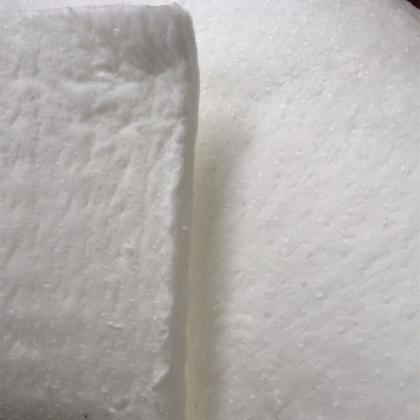
Where insulation volume is an important requirement, a texturized silica construction provides another option.
BSTFLEX's Heat Insulation Texturized Silica Sleeve uses a bulkier silica textile structure and is specified for continuous temperature resistance up to 1,000°C (1,832°F).
The choice between braided and texturized construction should be based on the exhaust geometry, available space, temperature profile, required insulation and installation method rather than simply choosing the product with the highest headline temperature.
Exhaust Heat Containment and Component Protection Are Not the Same
Insulating the exhaust pipe aims to reduce heat escaping from the pipe toward its surroundings.
Protecting a cable or hose beside the exhaust takes the opposite perspective: the heat source remains where it is, and the sensitive component receives an additional thermal barrier.
This difference changes what should be measured.
For Direct Exhaust Insulation
Measure:
- Pipe OD
- Pipe surface temperature
- Required insulation length
- Available insulation thickness
- Desired external thermal condition
For Exhaust-Adjacent Component Protection
Measure:
- Component OD
- Distance from exhaust
- Exhaust surface temperature
- Maximum allowable component temperature
- Duration of exposure
Silica Sleeve for Hydraulic Hose Near Exhaust
Hydraulic lines are commonly routed through engine compartments and mobile equipment where exhaust components occupy the same limited space.
The hydraulic fluid may remain within its normal operating range while the outside of the hose receives substantial radiant heat from an exhaust pipe, manifold or after-treatment system.
Installing silica sleeving around the hose creates an additional thermal layer between the exhaust and hose cover.
For this application, do not size the sleeve according to the exhaust pipe.
Size it according to:
- Hydraulic hose OD
- Ferrule OD
- Fitting OD
- Hose movement
- Available clearance
The thermal specification should then include exhaust temperature and distance from the heat source.
Example: Hydraulic Hose Beside a Diesel Exhaust Pipe
Consider a hydraulic hose with a 30 mm outside diameter routed 35 mm from a diesel exhaust pipe.
The exhaust pipe surface reaches a high temperature during full-load operation, while the hydraulic hose must remain within the temperature range specified by its manufacturer.
The design question is not:
"Can the silica sleeve survive the exhaust temperature?"
The useful question is:
"Can the selected sleeve construction reduce the thermal load enough to keep the hose within its allowable temperature under this installation condition?"
That answer depends on distance, exposure duration, airflow, sleeve construction and the hose temperature limit.
Silica Sleeve for Electrical Cable Near Exhaust
Electrical wiring is another common exhaust-adjacent component.
Automotive harnesses, generator cables, sensor wiring and engine control systems may run close to:
- Exhaust manifolds
- Turbochargers
- Downpipes
- Diesel particulate filters
- Catalytic converters
- Exhaust after-treatment systems
A high temperature exhaust sleeve installed around the cable can help reduce external thermal exposure to the cable jacket and insulation.
The sleeve provides thermal protection; it should not automatically be treated as the cable's primary electrical insulation or assigned an electrical dielectric rating unless specifically tested for that purpose.
Protecting Exhaust Sensor Wiring
Exhaust systems increasingly contain sensors for temperature, pressure, oxygen measurement and emissions control.
The sensor itself may be designed to operate in or near the exhaust stream, but its wiring and connector may have lower temperature limits.
Localized silica sleeving can be applied to suitable wire sections exposed to the highest radiant heat.
For these assemblies, measure:
- Wire or cable OD
- Connector dimensions
- Distance from exhaust
- Protected length
- Maximum cable or connector temperature
Silica Sleeve for Tubing Near Exhaust
Fluid tubes, sensor lines and other small-diameter tubing may also run through exhaust areas.
Depending on the system, excessive external heat can affect the tube itself or the fluid passing through it.
A silica sleeve for exhaust-adjacent tubing can be used as a flexible thermal barrier where suitable.
For additional pipe and tube selection information, see our guide to silica sleeve for high-temperature pipe and tubing protection.
Turbocharger Areas Require Special Attention
Turbocharged engines concentrate substantial heat in a compact area.
Hoses, wiring and tubes may pass close to the turbocharger housing, exhaust manifold and downpipe within a limited amount of available space.
Thermal protection in these areas should be approached as a system.
Possible measures include:
- Increasing component clearance
- Adding rigid or reflective heat shielding
- Using a suitable turbo heat shield
- Applying thermal sleeving to nearby hoses and cables
- Changing routing where practical
Silica sleeving can form one layer of this thermal-management strategy.
Automotive Exhaust Applications
Automotive exhaust packaging often places heat-sensitive components within short distances of the exhaust system.
Potential applications for silica sleeving include protection of:
- Engine wiring harnesses
- Sensor cables
- Fluid hoses
- Small tubing
- Control wires
- Exhaust-adjacent hydraulic lines
Vehicle applications should also consider vibration, road contamination, fluids, abrasion and the available installation envelope.
Diesel Engine and Heavy Equipment Exhaust Protection
Construction machinery, agricultural equipment, mining machinery and industrial diesel engines often combine hydraulic systems with high-temperature exhaust equipment.
This creates a recurring requirement for protecting hoses and wiring without restricting machine movement.
A braided silica sleeve can be useful where flexibility is required, but abrasion and fluid exposure should be evaluated separately from temperature resistance.
Generator Exhaust Systems
Generator sets can expose electrical cables, control wiring and service lines to exhaust heat during continuous operation.
Stationary generator installations may also operate for long periods, making continuous exposure more important than short peak temperature alone.
For generator applications, provide:
- Exhaust pipe surface temperature
- Operating hours
- Ambient enclosure temperature
- Distance to protected components
- Airflow or ventilation conditions
Marine Exhaust Applications
Marine engine compartments often combine limited space, exhaust heat, vibration and environmental exposure.
Silica sleeving can be considered for suitable exhaust-adjacent hoses, cables and tubing, but the complete marine environment should be evaluated.
Moisture, oil, fuel, salt exposure and maintenance requirements may influence whether a plain silica textile or another composite protection system is preferred.
Industrial Engine Exhaust Systems
Industrial engines used in pumps, compressors, power systems and processing equipment can operate for extended periods under load.
Long-duration exhaust heat can affect surrounding components even where short-term peak temperatures are not extreme.
For these applications, continuous temperature exposure and required service life should receive particular attention.
Should the Entire Exhaust Pipe Be Covered?
Not necessarily.
The required insulation length depends on where heat is creating the problem.
In some systems, only a short exhaust section near a sensitive component requires additional thermal management. In others, a longer pipe run may need insulation.
Localized protection can reduce material usage and simplify maintenance where full-system insulation is unnecessary.


 Rede IPv6 suportada