Silica Sleeve for Pipe and Tube Thermal Protection
Pipes and tubes operating close to furnaces, exhaust systems, burners, hot process equipment and other high-temperature components can create difficult thermal conditions for surrounding machinery. In some installations, the pipe itself needs an external thermal layer. In others, the main objective is to reduce the heat exposure reaching nearby cables, hoses, sensors or structural components.
A silica sleeve for pipe provides a flexible high-temperature textile layer that can be installed around suitable pipe and tubing assemblies where conventional lower-temperature sleeving may not provide sufficient thermal capability.
The correct solution, however, depends on more than temperature rating. Pipe outside diameter, surface temperature, bends, joints, vibration, installation sequence, available clearance and the purpose of the insulation all need to be considered before specifying a high temperature pipe sleeve.
First Determine What the Sleeve Needs to Protect
There are two fundamentally different reasons for installing silica sleeving in a piping system.
Insulating a Hot Pipe or Tube
In this arrangement, the sleeve is installed directly around the pipe or tube. The pipe is the heat source, and the objective may include creating a thermal barrier around its exterior or reducing direct heat exposure to the surrounding area.
The pipe surface temperature becomes one of the primary selection parameters.
Protecting a Pipe or Tube From an External Heat Source
A second situation occurs when a tube carries fluid, air or another medium but is routed beside an exhaust component, furnace wall, hot manifold or process equipment.
Here, the tubing is not necessarily hot because of its internal medium. Instead, the silica tube sleeve protects it against external radiant and environmental heat.
This distinction should be stated when requesting a quotation because the thermal conditions can be very different.
Where Silica Pipe Sleeves Are Used
High-temperature piping appears throughout industrial and transportation equipment. Silica sleeving can be considered where flexible textile protection is appropriate and where the actual operating conditions fall within the selected product specification.
| Application | Typical Heat Condition | Important Selection Factor |
|---|---|---|
| Industrial process piping | Hot pipe surface or nearby machinery | Pipe OD and continuous temperature |
| Furnace equipment | High ambient and radiant heat | Exposure duration and distance from furnace |
| Exhaust-related tubing | Radiant heat from exhaust components | Clearance from exhaust and local temperature |
| Engine compartments | Combined radiant and convective heat | Routing, vibration and installation space |
| Steel processing equipment | Hot machinery and process heat | Temperature, abrasion and surrounding hazards |
| Power generation equipment | Hot piping and engine or turbine environments | Continuous exposure and maintenance access |
| Marine machinery | Engine and exhaust heat | Routing, vibration and environmental exposure |
Pipe Outside Diameter Is the Starting Dimension
When selecting a silica sleeve for tubing, use the actual outside diameter rather than the nominal pipe designation.
This is particularly important because nominal pipe size does not necessarily represent the actual outside diameter of the finished pipe. Additional features such as couplings, unions, flanges, sensors and fittings may also be considerably larger than the straight pipe section.
Before selecting the sleeve diameter, measure:
- Actual outside diameter of the pipe or tube
- Largest coupling or fitting that the sleeve must pass over
- Outside dimensions at bends and formed sections
- Length of the section requiring thermal protection
- Available radial clearance around the assembly
If the sleeve is installed before fittings are assembled, the required installation diameter may be different from a retrofit installation over an existing pipe assembly.
Straight Pipe and Formed Tubing Require Different Considerations
A straight, stationary pipe is relatively simple to cover. Formed tubing can be more demanding.
Automotive, aerospace and industrial tube assemblies may contain multiple bends within a short distance. A sleeve that works well on the straight section must also follow these bends without excessive bunching, stretching or distortion.
This is one reason construction flexibility matters.
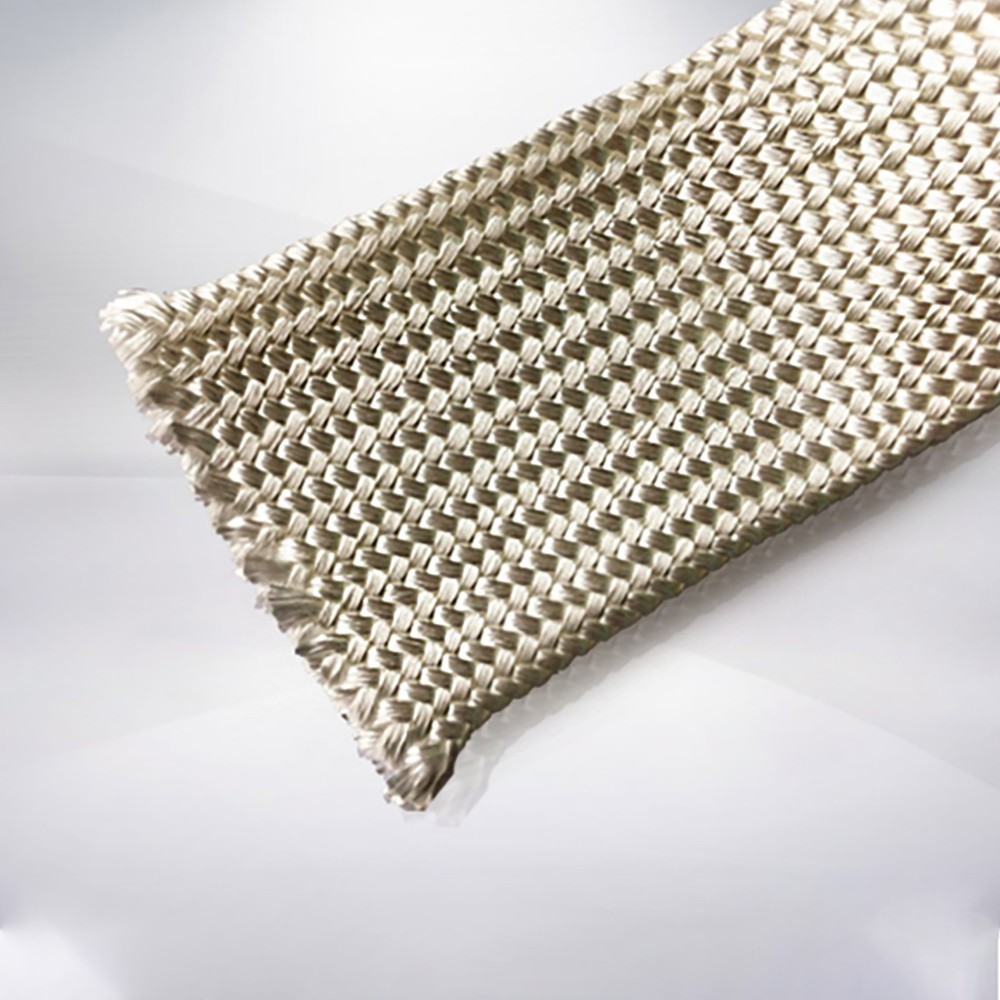
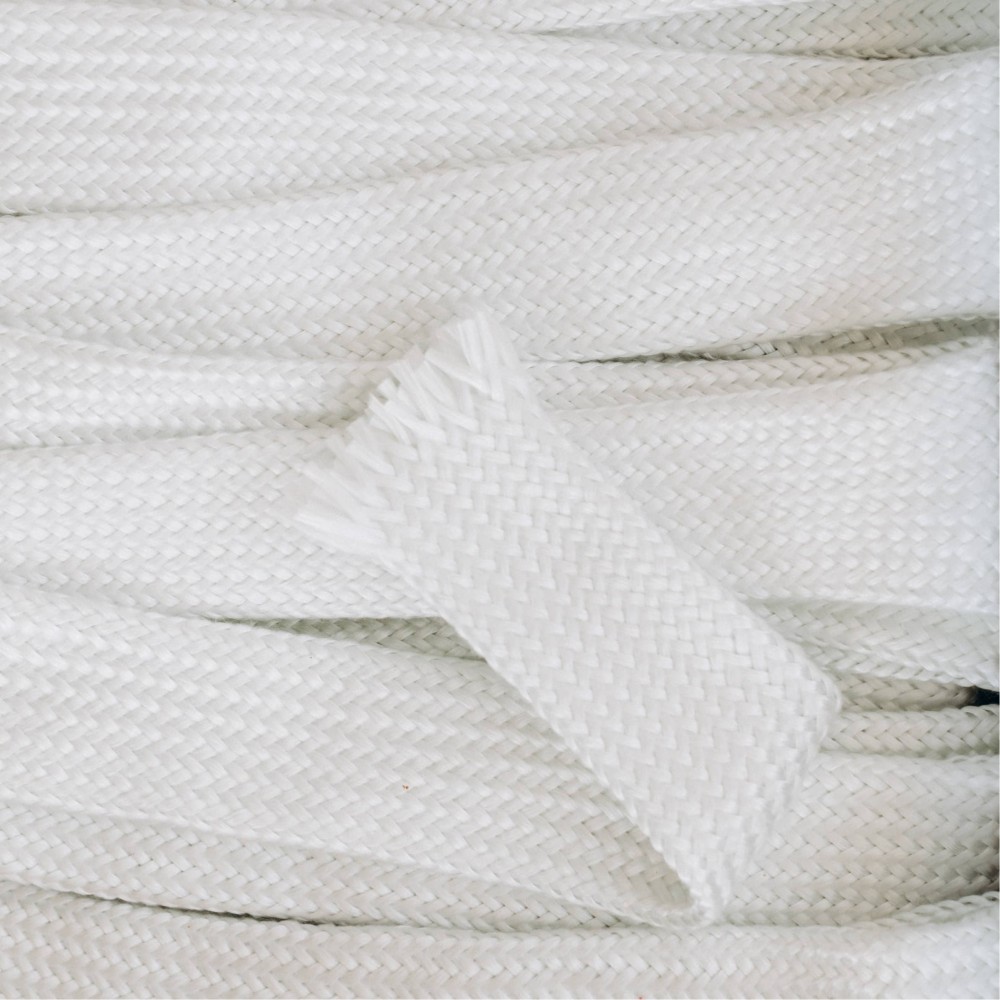
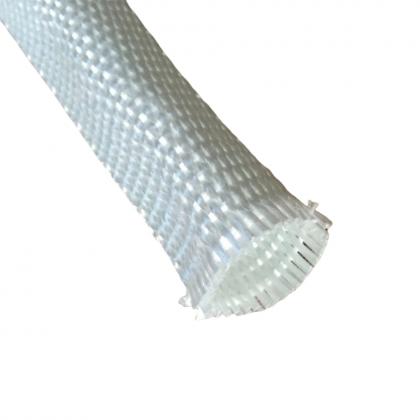
A High Temperature Resistant Braided Silica Sleeve provides a flexible braided construction that can be useful where the sleeve needs to follow tubing geometry and accommodate some variation in diameter.
The product has a maximum temperature resistance of up to 1,200°C (2,192°F). Actual application suitability should still be determined from the operating temperature, duration of exposure and installation conditions rather than the maximum rating alone.
Braided Construction Helps With Complex Routing
A braided sleeve changes geometry as it is expanded and compressed. This characteristic can help during installation over tubes, hoses and other components with moderate dimensional variation.
For pipe and tube applications, braided construction can be particularly useful where the assembly includes:
- Curved tubing
- Changes in direction
- Restricted installation access
- Moderate changes in outside diameter
- Vibration during operation
- Long routed sections
Radial expansion should not be treated as unlimited, however. Excessive expansion changes the braid geometry and can shorten the effective sleeve length. The largest section of the assembly should therefore be considered during dimensional selection.
Texturized Silica Sleeve for Thermal Insulation
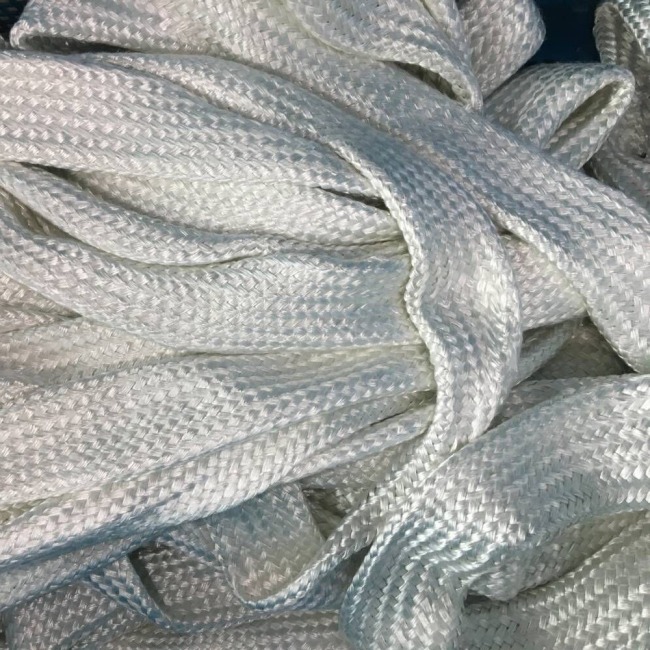
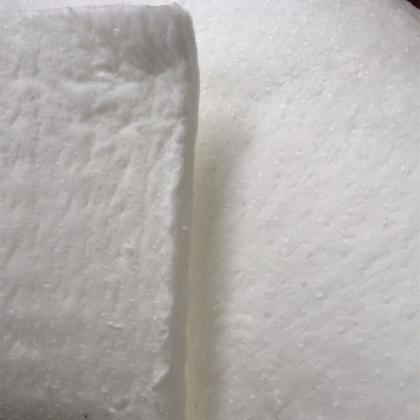
Another option is a texturized silica construction. Texturization creates a soft, flexible textile structure that can conform around the protected component.
The Heat Insulation Texturized Silica Sleeve is designed for continuous temperature resistance up to 1,000°C (1,832°F) and can be considered for thermal protection around suitable pipes, tubing, hoses, cables and industrial components.
Choosing between braided and texturized construction should be based on the geometry of the assembly, installation method, temperature requirement and required flexibility rather than the product name alone.
Surface Temperature and Ambient Temperature Are Not the Same
One of the most common specification errors is providing only a general equipment temperature.
Consider a tube running 50 mm away from a hot exhaust component. The exhaust surface temperature is not automatically the temperature experienced by the tube. Distance, airflow, shielding, surrounding materials and operating duration influence the actual exposure.
Conversely, when a high temperature pipe insulation sleeve is installed directly on a hot pipe, the interface temperature can be much closer to the pipe surface temperature.
A useful thermal specification should therefore identify:
| Thermal Parameter | Why It Matters |
|---|---|
| Pipe surface temperature | Important for direct-contact installations |
| Ambient temperature | Defines the surrounding operating environment |
| Heat source temperature | Helps characterize external thermal exposure |
| Distance from heat source | Important for radiant heat applications |
| Continuous or intermittent exposure | Separates normal operation from short thermal events |
| Required component temperature | Defines the actual protection objective |
Continuous Temperature and Maximum Temperature Must Be Separated
Temperature figures should always be interpreted according to the specific product construction and test condition.
A maximum temperature capability should not automatically be used as the recommended continuous operating temperature of every silica sleeve construction.
For example, the braided silica sleeve in our current product range is specified for maximum temperature resistance up to 1,200°C, while the texturized silica sleeve is specified for continuous temperature resistance up to 1,000°C.
When evaluating a heat resistant pipe sleeve, provide the expected continuous temperature as well as any short-duration peak exposure.
Pipe Bends Can Change the Installed Sleeve Geometry
Bends require particular attention when the sleeve fits relatively closely around the pipe.
As a textile sleeve follows a tight bend, material can compress on the inside radius and extend around the outside radius. The tighter the bend, the more important sleeve flexibility becomes.
For assemblies with multiple tight bends, evaluation with a physical sample can be more useful than selecting solely from nominal dimensions.
When requesting a sample, providing a drawing or photograph of the tube routing can help determine whether the proposed sleeve construction is practical to install.
Fittings, Couplings and Flanges Need Separate Evaluation
The straight pipe OD is frequently not the largest dimension in the assembly.
A 30 mm tube, for example, may have a substantially larger coupling. If the sleeve has to be pulled over the coupling after assembly, sizing only for the 30 mm tube can result in an installation problem.
There are several possible approaches depending on the design:
- Select a sleeve capable of passing over the largest fitting
- Install the sleeve before the fitting is assembled
- Protect only the straight pipe section
- Use separate insulation around oversized joints
- Specify a custom thermal protection configuration for complex assemblies
The installation sequence should therefore be decided before the sleeve diameter is finalized.
Static Pipe Versus Moving Tube Assemblies
Industrial process piping is often stationary. Automotive and machinery tubing may be subjected to engine movement, vibration or repeated displacement.
These conditions affect sleeve selection.
For a static installation, the primary considerations may be temperature, diameter and long-term thermal exposure. For a vibrating assembly, the specification should also consider mechanical contact, routing and sleeve retention.
If the sleeve repeatedly rubs against a bracket or sharp metal edge, thermal resistance alone is not enough to define service life. Abrasion should be treated as a separate engineering requirement.
Silica Sleeve Near Exhaust Systems
Exhaust systems are a common source of severe localized heat. Pipes, tubes, hoses and cables routed through the same area can experience elevated temperatures even without contacting the exhaust directly.
In these applications, it is important to distinguish between two objectives.
Covering the Exhaust Pipe Itself
If silica sleeving is intended to cover the hot exhaust pipe, pipe surface temperature, construction, available diameter and the required heat-containment performance must be evaluated.
Protecting Tubing Located Near the Exhaust
If the sleeve is installed around a fluid tube or other component beside the exhaust, the objective is external heat protection. Distance from the exhaust, radiant heat intensity, airflow and the maximum allowable tube or fluid temperature become important.
These applications should not be treated as identical simply because both involve an exhaust system.
Furnace and High-Temperature Industrial Piping
Furnaces, kilns and heat-processing equipment can expose nearby tubing to high ambient and radiant temperatures for extended periods.
A silica pipe sleeve may be considered for suitable lines, instrumentation tubing and other components where a flexible high-temperature textile barrier is required.
Before specifying the sleeve, determine whether the exposure is:
- Continuous furnace ambient heat
- Radiant heat from a furnace opening or hot surface
- Direct contact with a heated pipe
- Intermittent exposure during loading or maintenance
- A combination of thermal and mechanical hazards
Each condition can require a different protection strategy.
Foundry and Steel Mill Applications Need Hazard-Specific Evaluation
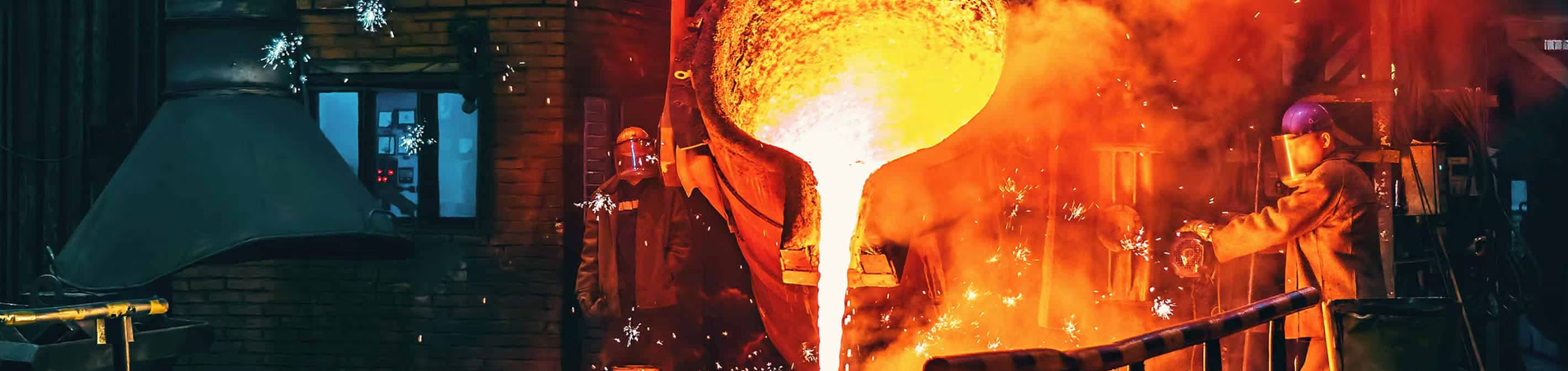
Foundries and steel processing plants combine high temperatures with demanding mechanical conditions. Pipework and tubing may be exposed to radiant heat, scale, vibration, abrasion and metal-processing operations.
Silica fiber has strong high-temperature capability, but a plain silica textile sleeve should not automatically be specified as protection against direct molten-metal splash simply because it withstands high temperatures.
Where molten metal exposure is possible, the actual splash hazard, metal type, quantity, exposure duration and required protective construction should be evaluated separately.
Oil, Water and Process Fluids
The external environment around a pipe can be as important as temperature.
Plain silica textile should not automatically be treated as oil-proof, water-proof or chemically impermeable. If the sleeve is expected to experience repeated contact with lubricants, fuels, hydraulic fluids, process chemicals or outdoor moisture, tell the manufacturer when specifying the product.
A coating, outer layer or different composite construction may be more appropriate where fluid resistance is a major requirement.
How to Specify a Silica Sleeve for Pipe or Tube
A complete specification makes it easier to select the correct sleeve without relying on assumptions.
| Required Information | Recommended Detail |
|---|---|
| Application | Process pipe, exhaust-related tube, furnace tubing, engine line or other use |
| Pipe or tube OD | Actual finished outside diameter |
| Largest fitting OD | Required if the sleeve must pass over fittings |
| Protected length | Length of each sleeve section |
| Continuous temperature | Normal operating exposure |
| Peak temperature | Maximum short-duration exposure, if applicable |
| Heat source | Pipe surface, exhaust, furnace, burner or process equipment |
| Installation | Before assembly, after assembly or retrofit |
| Geometry | Straight, curved, multiple bends or irregular shape |
| Movement | Static, vibrating or moving assembly |
| Environment | Oil, water, chemicals, abrasion or other exposure |
| Quantity | Prototype, trial quantity or production requirement |
Common Pipe Sleeve Selection Mistakes
Several specification errors repeatedly create problems in high-temperature pipe and tubing applications.
- Using nominal pipe size instead of actual outside diameter
- Ignoring the dimensions of fittings and couplings
- Selecting solely by maximum temperature rating
- Not distinguishing continuous temperature from short peak exposure
- Ignoring tight bends in formed tubing
- Assuming the sleeve can expand over any fitting
- Treating thermal protection as equivalent to abrasion protection
- Assuming plain silica textile is automatically resistant to every fluid
- Failing to distinguish direct pipe insulation from external radiant heat protection
Resolving these questions before production reduces the risk of receiving a sleeve that has the correct material but the wrong geometry or construction for the assembly.
Custom Silica Sleeving for Industrial Pipe and Tube Applications
BSTFLEX manufactures silica sleeve products for high-temperature thermal protection applications. Different constructions can be developed according to diameter, required length, temperature conditions and installation requirements.
Our current silica sleeve range includes braided silica sleeving for flexible high-temperature protection and texturized silica sleeving for high-temperature insulation applications.
For OEM and industrial projects, send us the pipe or tube OD, maximum fitting OD, sleeve length, operating temperature, heat source, installation drawing or photograph, and estimated quantity. Samples can be evaluated before production where dimensional fit or routing is critical.
Frequently Asked Questions
Can silica sleeve be used directly on a hot pipe?
Silica sleeving can be used in suitable high-temperature pipe applications, but the actual pipe surface temperature, sleeve construction and required thermal performance should be checked against the selected product specification.
How do I select the correct silica sleeve diameter for a pipe?
Use the actual finished outside diameter of the pipe or tube. If the sleeve must pass over a fitting, coupling or connector, measure the largest outside dimension of that component as well.
Can braided silica sleeve follow pipe bends?
Braided construction provides flexibility and can conform to many curved tube assemblies. Tight bend radius, sleeve diameter and braid geometry should still be evaluated, particularly on complex formed tubing.
What temperature can a silica pipe sleeve withstand?
The temperature capability depends on the specific silica material and sleeve construction. BSTFLEX's High Temperature Resistant Braided Silica Sleeve is specified for maximum temperature resistance up to 1,200°C, while the Heat Insulation Texturized Silica Sleeve is specified for continuous temperature resistance up to 1,000°C.
Is silica sleeve suitable for exhaust pipes?
It can be considered for appropriate high-temperature exhaust-related applications. Direct insulation of an exhaust pipe and protection of a tube located near an exhaust system are different thermal conditions and should be specified separately.
Can silica sleeve protect tubing in a furnace environment?
Silica sleeving can provide high-temperature thermal protection for suitable tubing and related components in furnace environments. Continuous ambient temperature, radiant heat, distance from the heat source and exposure duration should be provided when selecting the sleeve.
Is silica sleeve resistant to molten metal?
High-temperature resistance alone does not establish molten-metal splash protection. Foundry and steel mill applications involving direct molten-metal exposure should be evaluated according to the specific metal, splash condition and required protective construction.
Can custom silica sleeve sizes be manufactured?
Yes. Silica sleeving can be manufactured in different diameters and lengths according to the pipe, tube, hose or cable assembly and project requirements. Providing actual dimensions and installation information helps determine the appropriate construction.


 Rede IPv6 suportada